
Search for the best answer engine optimization (AEO) tools and you get a page of listicles that each rank the publisher's own tool first. This is not that. Most tools sold as "AEO tools" are the same AI visibility tools under a different label, so the real question is not which tool wins overall. It is which job you need done.
Pick the job, then the tool. The table below is the short version; the sections after it explain the trade-offs.
Disclosure: geotoolbox, the site you are reading this on, makes one of the tools listed here. Our entry is labeled, its limits are stated, and you should judge it against the others on the same criteria, not on our word. Every price below was checked on the vendor's own page in August 2026, except Profound's, rechecked on September 26, 2026.
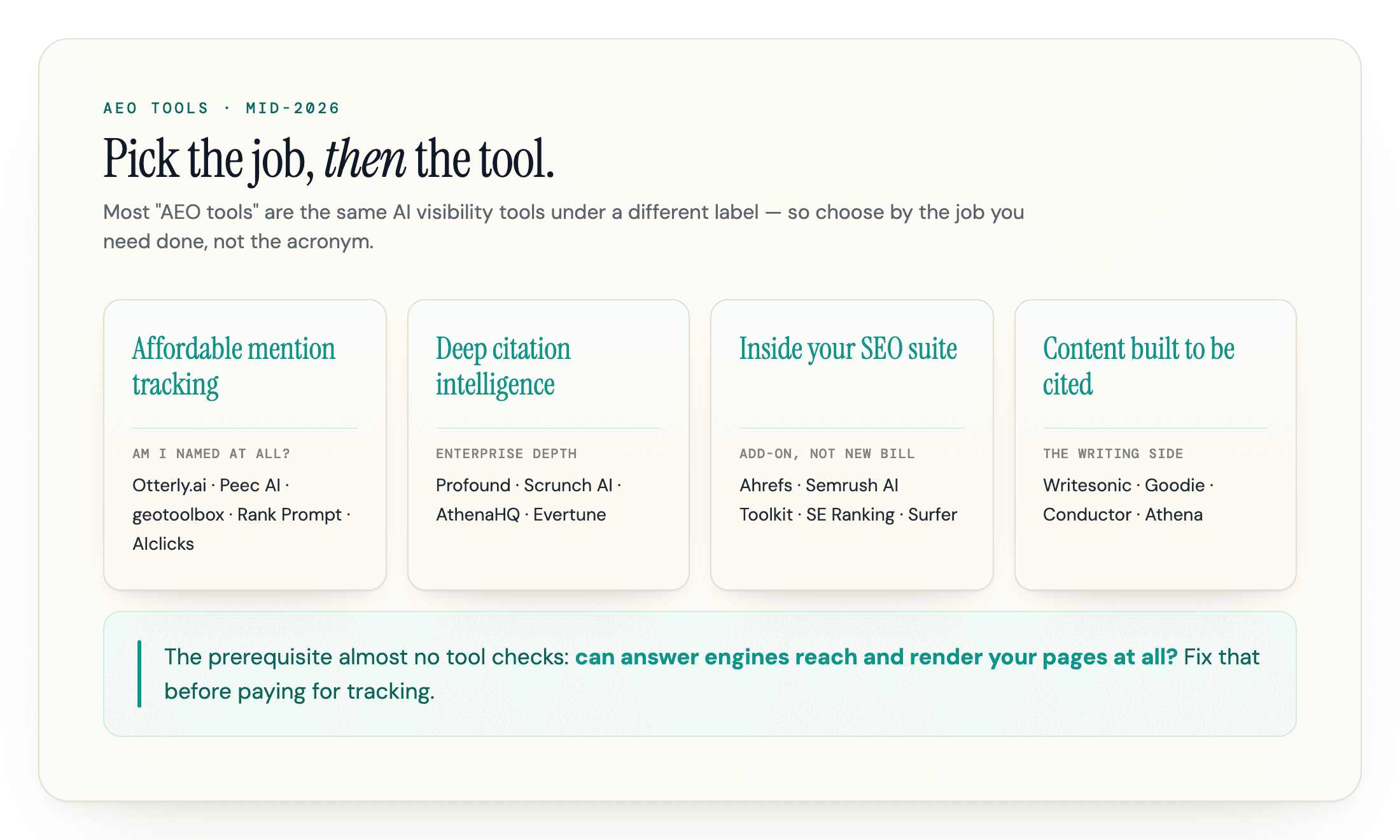
AEO Tools at a Glance
| Tool | Best for the job | Engines at entry tier | Entry price (verified Aug 2026) | Free option |
|---|---|---|---|---|
| Profound | Enterprise citation tracking | 3 on free Trial (ChatGPT, Gemini, AI Overviews); up to 9 on Enterprise | No self-serve brand tier; free Trial, then custom Enterprise | 7-day Trial (50 prompts/day) |
| Scrunch AI | Citations plus crawler analytics | 4 LLMs (Core tier) | $250/mo | 7-day trial |
| AthenaHQ | Citations plus blind-spot audits | 10 engines | $295/mo ($245 annual) | Free Essential tier |
| Evertune | Large-scale prompt testing | Large prompt sets | $800/mo Pro; enterprise on request | None |
| Ahrefs Brand Radar | SEO-suite users | Multiple | Paid tracking from $50/mo | Free one-shot checker |
| Semrush AI Toolkit | SEO-suite users | 4 engines | $99/mo add-on, per domain | None (needs a paid Semrush plan) |
| SE Ranking | SEO-suite users | Multiple | AI Search add-on €79/mo (€63.20 annual) | None |
| Writesonic | Content plus light tracking | Multiple | Varies by plan (content-led) | Trial |
| Conductor & AirOps | Enterprise content generation | Multiple | Contact sales | None |
| HubSpot AEO | Free-to-start all-in-one | 3 (ChatGPT, Gemini, Perplexity) | $50/mo ($45 annual) | Free 25-prompt trial |
| Otterly.ai | Budget mention tracking | 4 (ChatGPT, AI Overviews, Perplexity, Copilot) | ~$29/mo | Trial; Gemini & Claude are paid add-ons |
| Peec AI | Affordable depth | 3 models | €85/mo (€70 annual) | Trial |
| geotoolbox | Tracking plus a reachability check | 3 (ChatGPT, Perplexity, Google AI Overviews) | From $99/mo ($79 annual) | Free reachability tools + 7-day trial |
Prices are entry-tier starting points verified on each vendor's page in August 2026 (Profound's rechecked September 26, 2026), not quotes. Engine counts are for the tier named; higher tiers add engines. Read the row for the tier you would actually buy, since entry plans are often the most limited.
AEO Tools Are Mostly GEO Tools
Before spending anything, know what you are buying. Answer engine optimization (AEO) and generative engine optimization (GEO) describe almost the same work, and the tools reflect that. G2 files answer engine optimization software under a category it also labels generative engine optimization, and the same vendors appear on "best AEO tools" and "best GEO tools" lists alike.
Where a real line exists, it is not AEO versus GEO. It is between tools that only measure and tools that also change something. Most of this category measures: it reports whether you are named and cited. A smaller set adds remediation, generating schema, rewriting pages, or flagging what to fix. That divide matters more for your budget than the acronym on the box. Our explainer on GEO versus AEO versus SEO draws the full comparison.
There is also a fair argument that none of this is new, that AEO is SEO with a fresh acronym. The kernel is right: clear, trustworthy, well-structured content carries straight over, and our AEO best practices checklist is those fundamentals as a page-by-page audit. What is genuinely different is the unit of measurement. Traditional SEO tracks rankings and clicks. An AEO tool tracks whether your brand is named and cited inside a generated answer across ChatGPT, Perplexity, Gemini, and Google's AI Overviews.
That shift is the whole reason the category exists. Being named inside the answer is increasingly the only visibility there is: Pew Research found people click a result on just 8% of searches that show an AI summary, against 15% without one. And AI Overviews now appear on nearly half of Google searches by BrightEdge's tracking. Most of the tools below measure that visibility. They just do it for different budgets and jobs.
What an AEO Tool Actually Does
Strip away the marketing and an AEO tool does three jobs, plus a prerequisite most ignore.
- Track mentions and citations. It runs a fixed set of prompts on a schedule and records whether the engines name you, whether they cite you as a source, and your share of voice against competitors.
- Benchmark competitors. It shows the same data for the rivals that surface in your answers, so you can see the gap.
- Tell you what to change. The better tools turn that data into specific moves: schema to add, pages to restructure, content to write.
That first job hides a distinction worth insisting on. A mention is your brand named in an answer with no link. A citation is your page linked as a source in that answer. They are not the same signal, and a tool that reports one blended "visibility score" can hide which one you are missing. A low score might mean you are never named, named but never cited, or, worst of all, that the engine never read your site.
That last case is the prerequisite few trackers check: reachability. A tool can report a confident zero share of voice when the real problem is that the AI crawler could not fetch or render your pages. Keep it in mind, because it is the cheapest thing to fix and the easiest to miss.
When you compare tools, five things separate a platform from a dashboard: how many engines it covers, whether it tracks citations or only mentions, whether it works at the individual-prompt level, how often it refreshes, and whether it tells you what to do next. Price matters too, and it varies more than most buyers assume.
The Best AEO Tools, by What You Need
Rather than a ranked list, here are the tools grouped by the job you are hiring them for. Most teams need one job done well, not the widest feature set.
If You Need Deeper Citation and Content Intelligence
Larger teams want more than a mention count: prompt-volume data, citation-source analysis, and remediation. This is the expensive end.
Profound
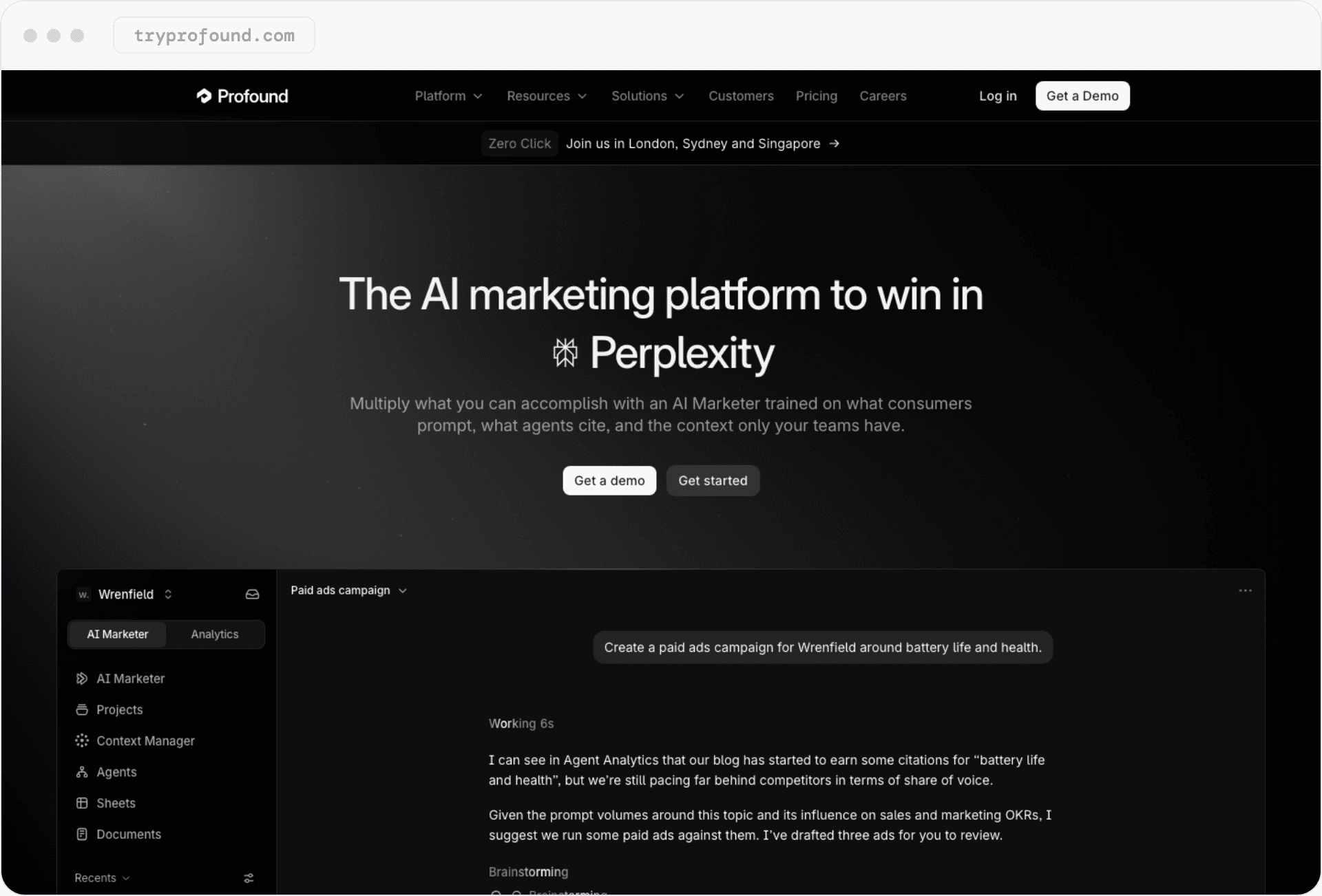
Best for: enterprise citation tracking.
Profound is the category benchmark, tracking citations and sentiment across the top answer engines using front-end data rather than API calls alone, which matters because what an API returns can differ from what a real user sees. As of September 2026 it sells no self-serve tier for brands: a free Trial (50 prompts a day for 7 days, on ChatGPT, Gemini, and Google AI Overviews) and a custom Enterprise plan covering up to 9 engines are the only brand options. The $99 Starter and $399 Growth brand tiers still quoted around the web were withdrawn; agencies buy a separate plan, Agency Growth, $99/month base plus $399/month per full client workspace (add-on). The money agrees with the benchmark label: Profound raised a $180 million Series D at a $1.8 billion valuation in September 2026, seven months after its $96 million Series C.
What works:
- front-end data, not API calls alone
- up to 9 engines on Enterprise
What doesn't:
- no self-serve brand tier
Scrunch AI
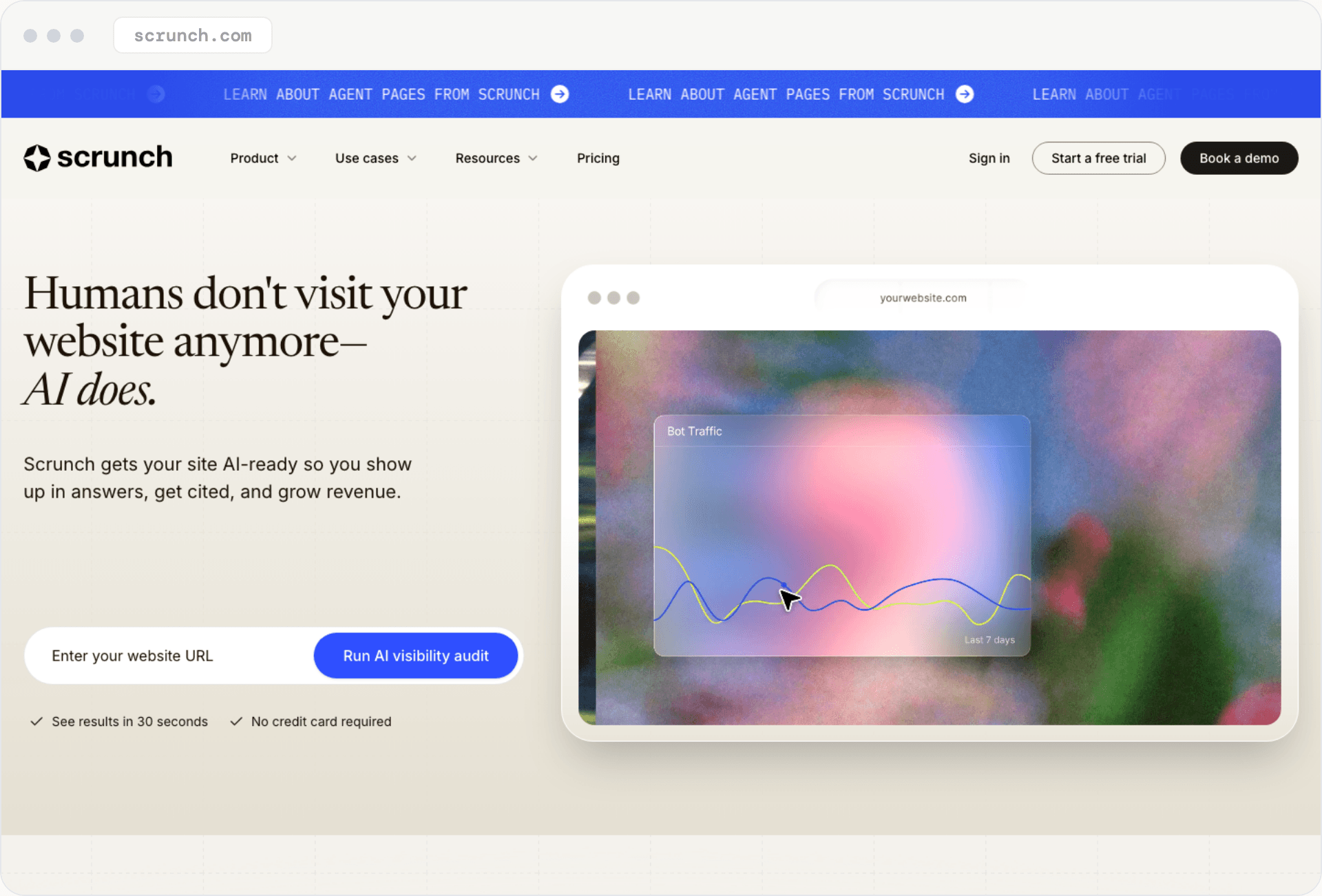
Best for: citations plus crawler analytics.
Scrunch AI focuses on citation patterns and auditing, with Scrunch's entry plan at $250 a month across four engines and adding LLM crawler analytics. Scrunch became a Sitecore company in June 2026.
What works:
- LLM crawler analytics built in
What doesn't:
- $250 a month to start
AthenaHQ
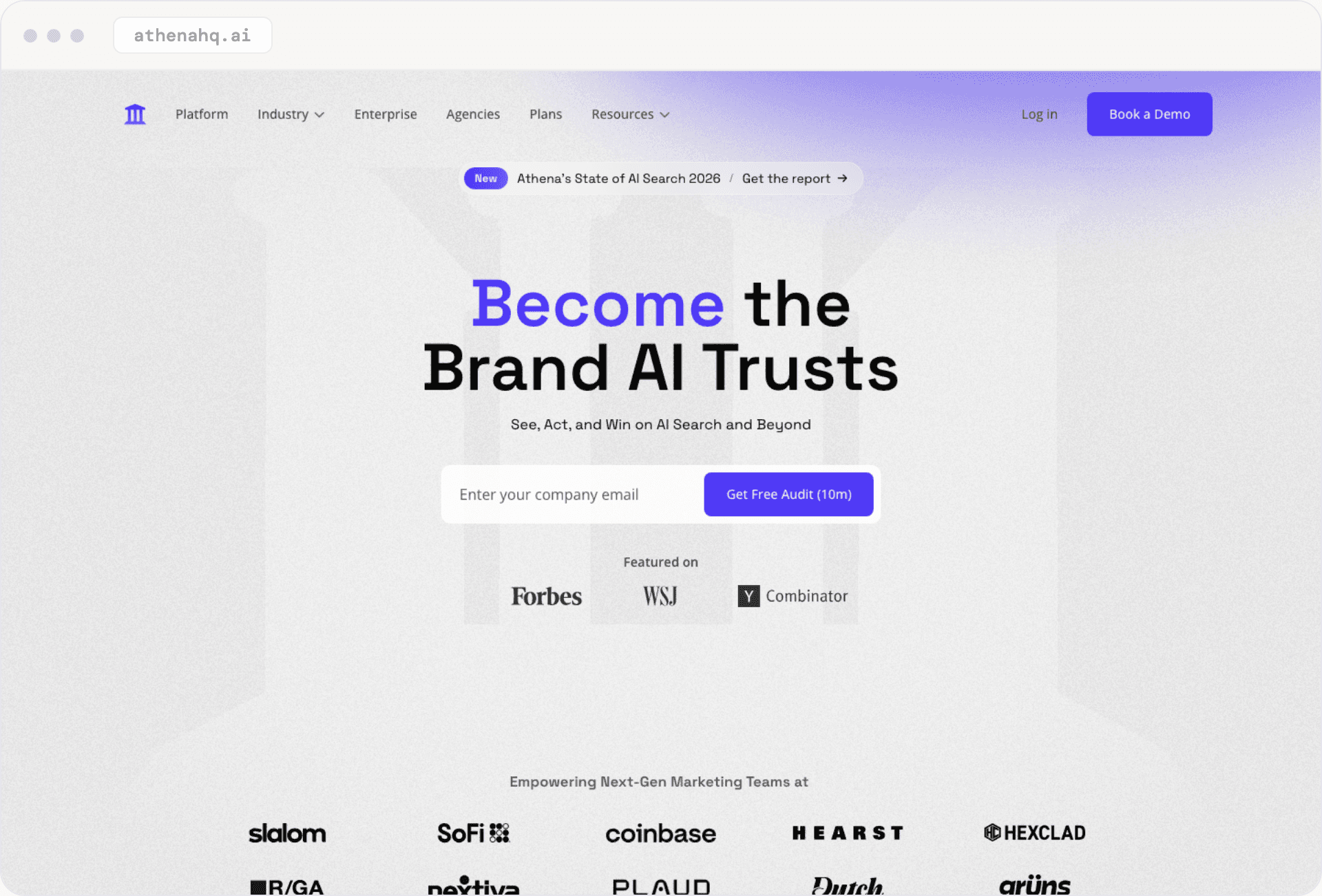
Best for: wide engine coverage plus blind-spot audits.
AthenaHQ also focuses on citation patterns and auditing, self-serve from $295 a month ($245 annual) with a free Essential tier, the widest entry engine coverage at ten, and blind-spot detection.
What works:
- ten engines at entry
- free Essential tier
What doesn't:
- $295 a month once you outgrow it
Evertune
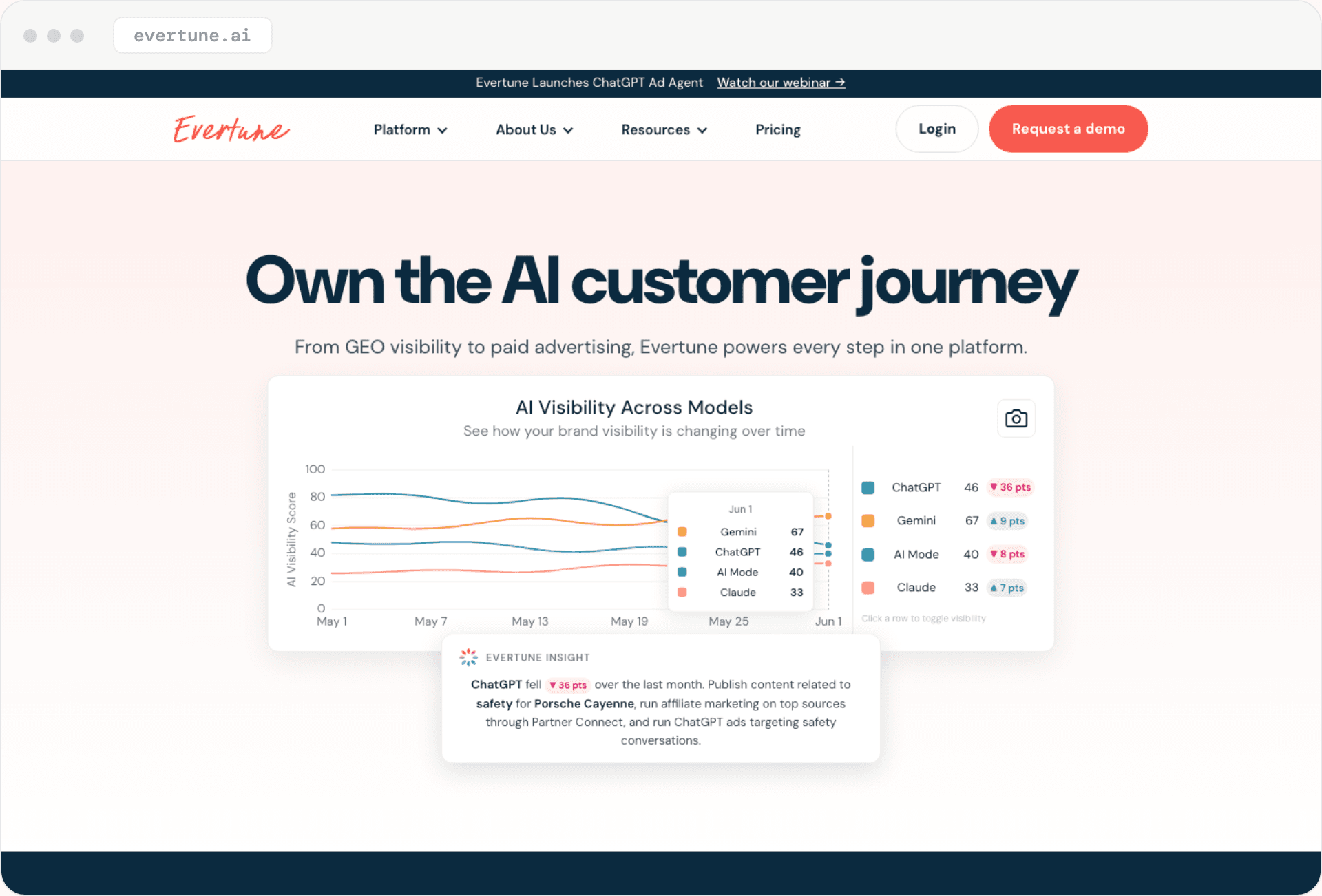
Best for: large-scale prompt testing.
Evertune targets enterprises, at $800 a month for its Pro tier and custom pricing above it for large-scale prompt testing built to reduce the run-to-run noise that makes single checks unreliable.
What works:
- prompt sets large enough to beat run-to-run noise
What doesn't:
- $800 a month to start
Conductor also targets enterprises. Like everything in this tier, these tools are powerful and priced accordingly; only the citation depth and compliance needs of a large brand justify the cost.
If You Already Pay for an SEO Suite
If you run an SEO platform, the cheapest AEO tool may be one you already have.
Ahrefs Brand Radar
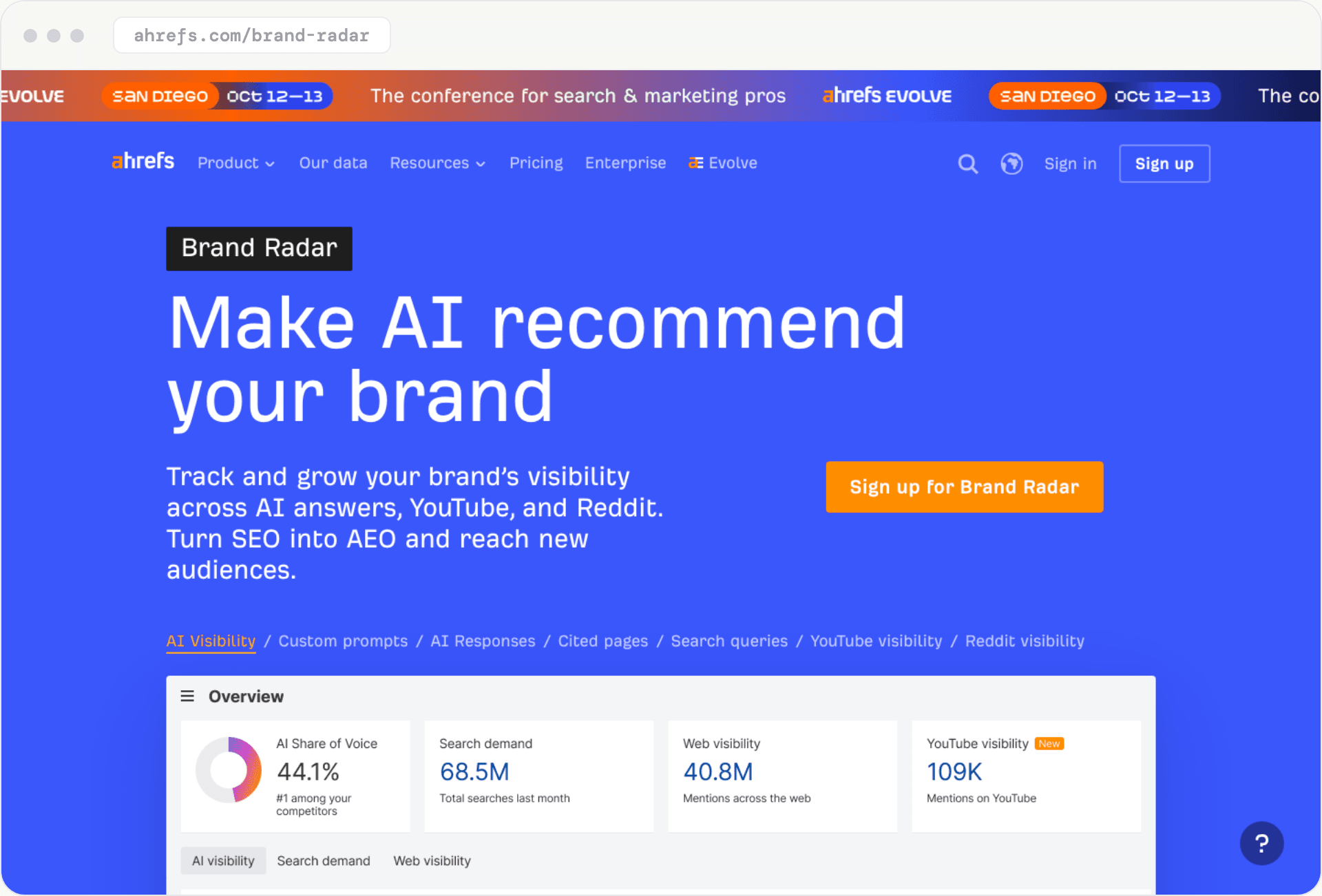
Best for: Ahrefs users wanting a free first snapshot.
Ahrefs offers a free one-shot AI visibility checker for a snapshot, with its Brand Radar tracking on a paid plan from about $50 a month.
Semrush AI Toolkit
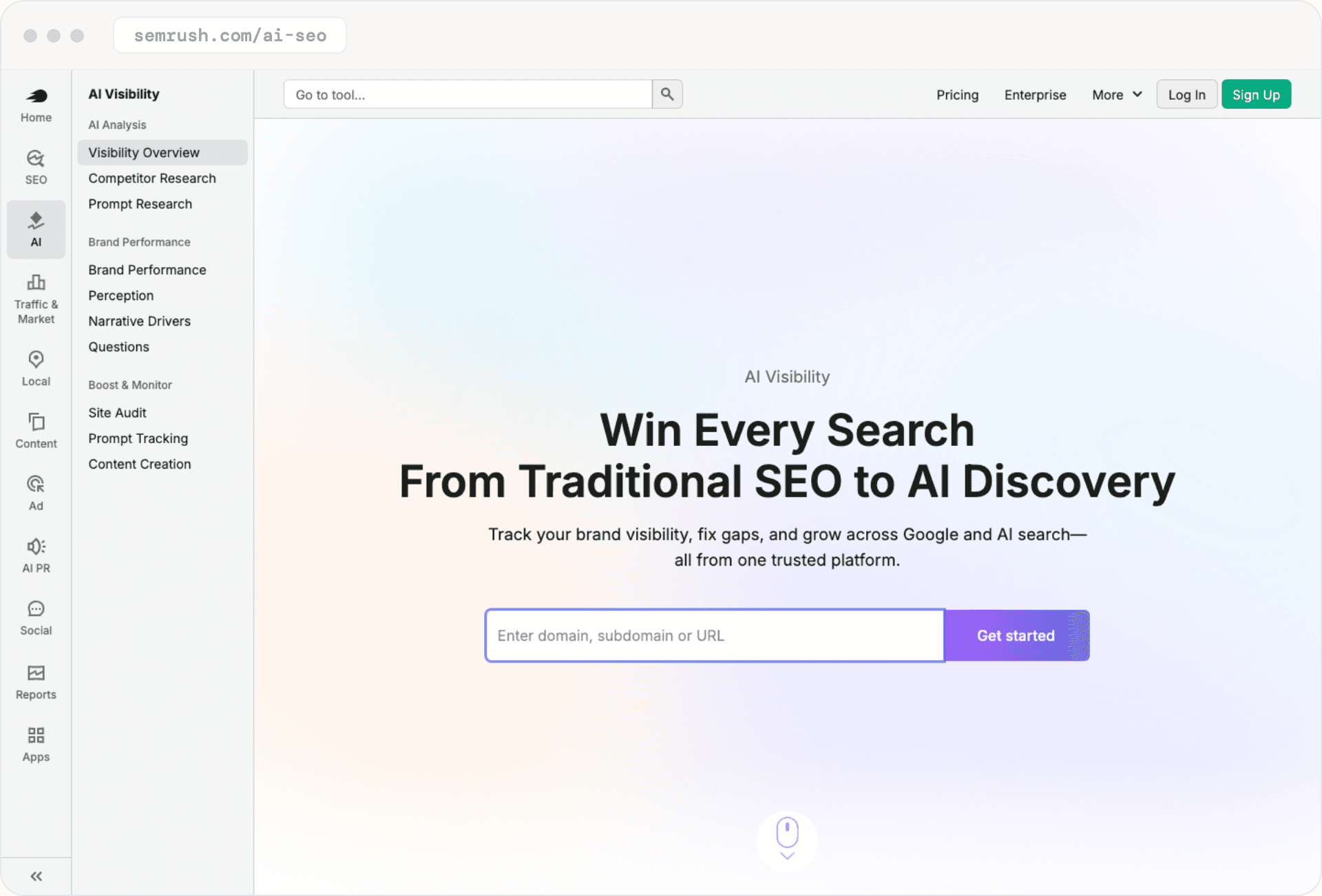
Best for: Semrush customers.
Semrush's AI Toolkit adds visibility tracking as a $99-a-month add-on per domain, covering four engines, on top of a paid Semrush plan. One development to factor in: Adobe completed its acquisition of Semrush on April 28, 2026, so expect the AI Toolkit's packaging to shift over time.
SE Ranking
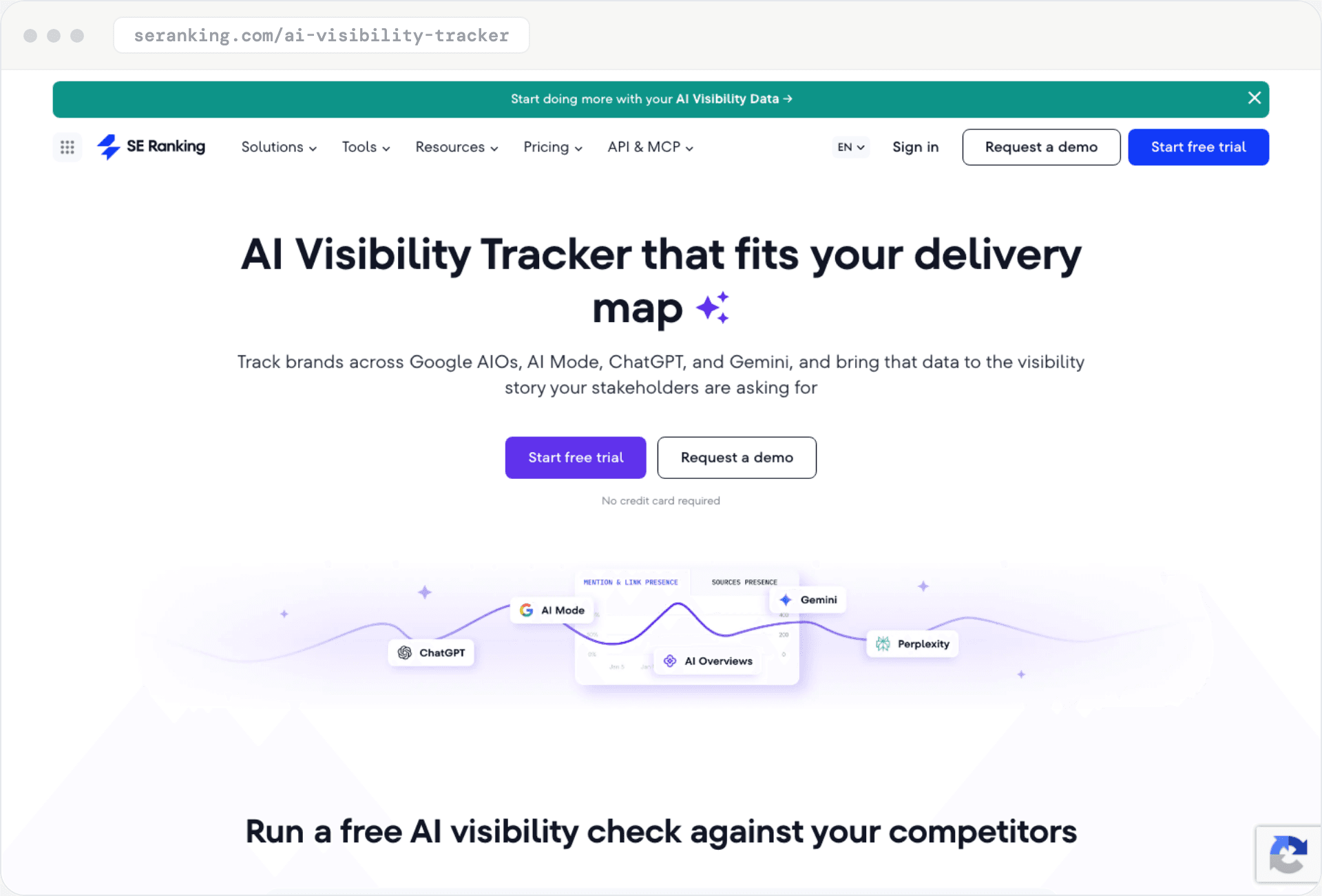
Best for: SE Ranking customers.
SE Ranking layers an AI Search add-on at €79 a month (€63.20 billed annually).
Surfer also adds AI tracking to its content tools. None of these suite add-ons match a dedicated platform's prompt-volume depth, but putting AI metrics next to your keyword data is sensible and avoids paying twice. Our rundown of GEO tools compares the dedicated platforms in more detail.
If You Want to Optimize Content to Be Cited
Tracking tells you where you stand; it does not write the page. A separate group leans toward the content side. Writesonic and AirOps pair generation with AEO workflows, and Conductor and AthenaHQ include writing assistants tuned for citations. Treat AI-generated drafts with care, though, because a model writing commodity content produces exactly what other models have no reason to cite. The research that defined GEO found that citing sources, adding quotations, and including statistics are the changes that lift visibility. The tool can structure and check; the original substance has to be yours. The craft of writing a page that gets quoted is its own skill, which our guide to AI content optimization covers at the sentence level, and for the tools that score that work, see our roundup of the best content optimization tools.
If You Want Affordable Mention Tracking
Most people asking for an AEO tool just want to know whether the engines name them, without a four-figure bill. Several tools cover that well.
HubSpot AEO
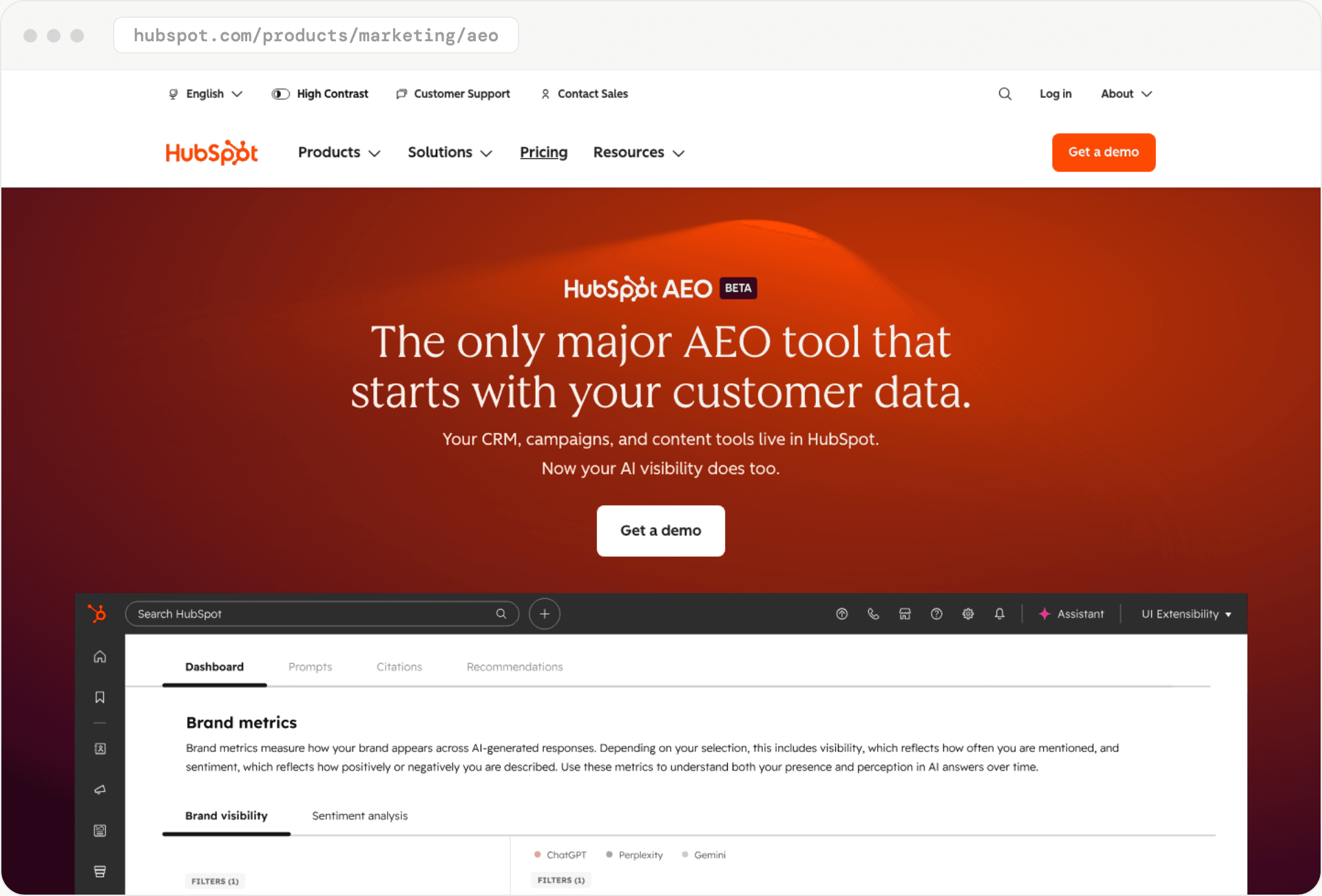
Best for: a free start, with AI visibility inside HubSpot.
HubSpot AEO is the newest entrant and the easiest free-to-start option, at $50 a month ($45 billed annually) with a free 25-prompt trial, tracking ChatGPT, Gemini, and Perplexity. It is being marketed hard and turning up across these lists, so expect to see it recommended widely.
What works:
- free 25-prompt trial before you pay
- sits next to your HubSpot CRM data
What doesn't:
- three engines only
- still labeled Beta
Otterly.ai
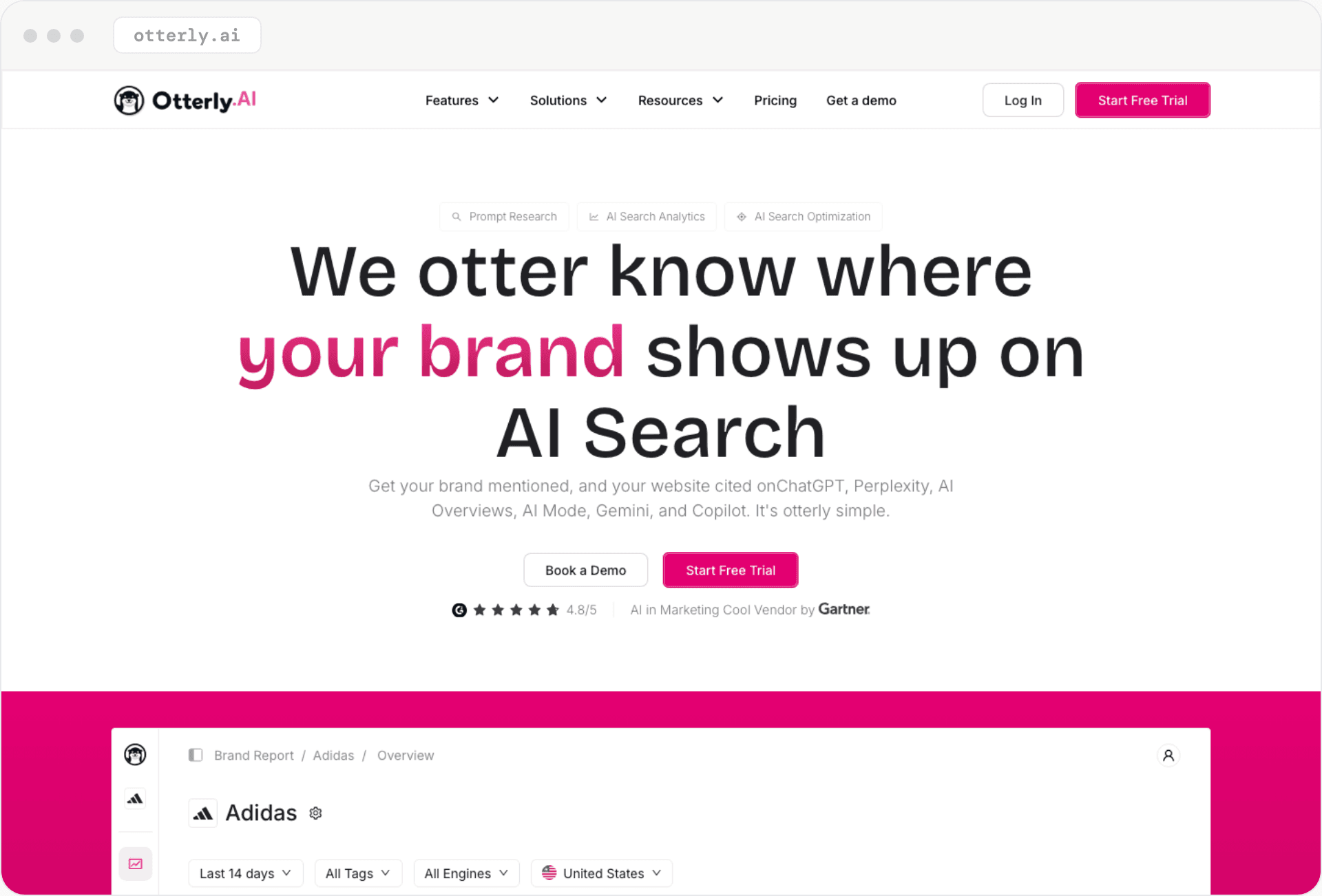
Best for: cheap, simple mention tracking.
Otterly.ai starts around $29 a month across the major engines, though Gemini and Claude are paid add-ons on every plan, so check the engine list against where your buyers actually ask.
What works:
- cheapest entry here, around $29 a month
- AI Overviews and Copilot at entry
What doesn't:
- Gemini and Claude cost extra
Peec AI
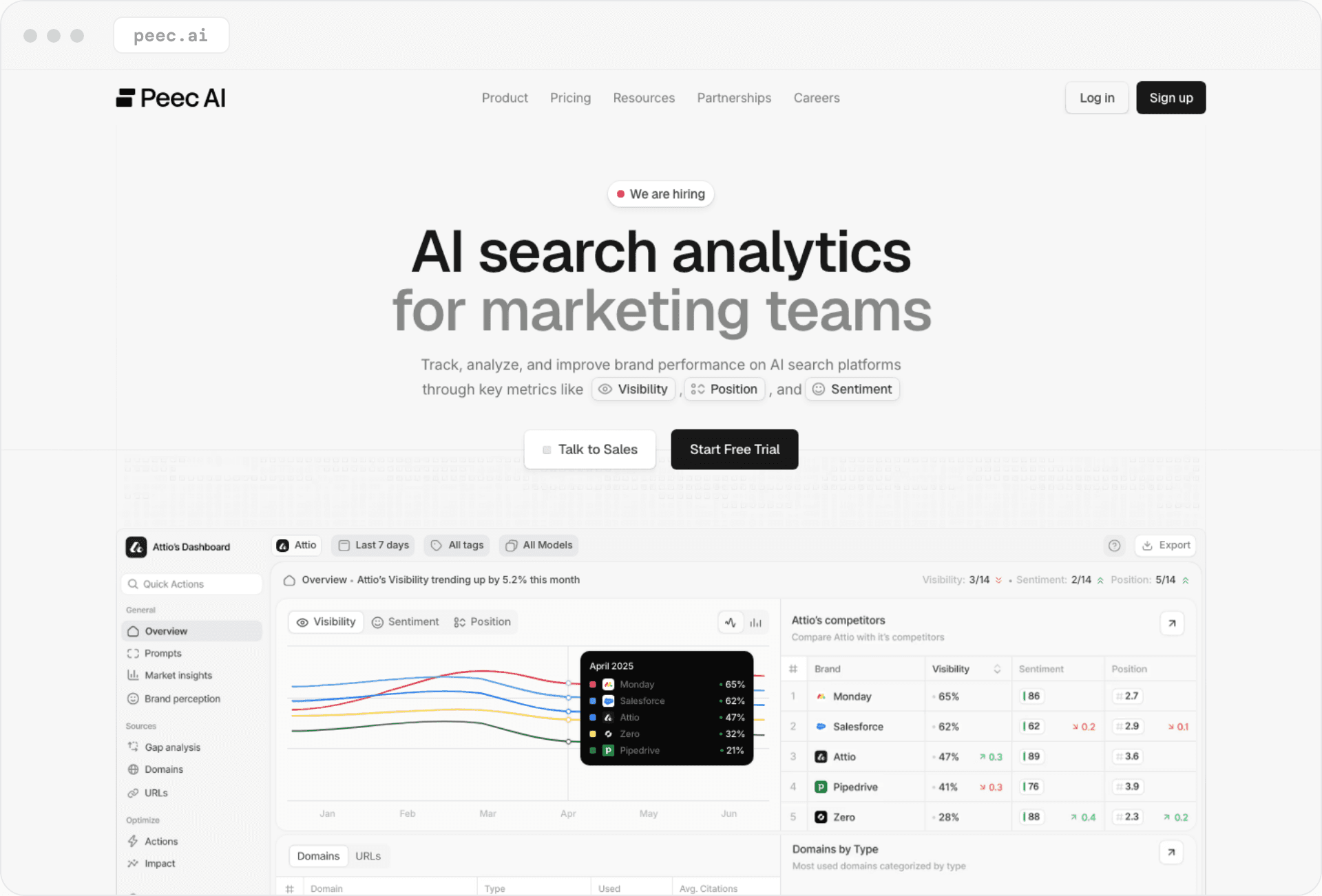
Best for: depth without enterprise pricing.
Peec AI sits a step up at €85 a month (€70 billed annually), and is the tool practitioners most often name when they want depth without enterprise pricing.
What works:
- unlimited users on every plan
- daily tracking from the entry tier
What doesn't:
- three-model cap on every self-serve tier
AIclicks (around $59 a month) and Rank Prompt (around $49) round out the budget tier, the latter built for agencies juggling several clients.
geotoolbox
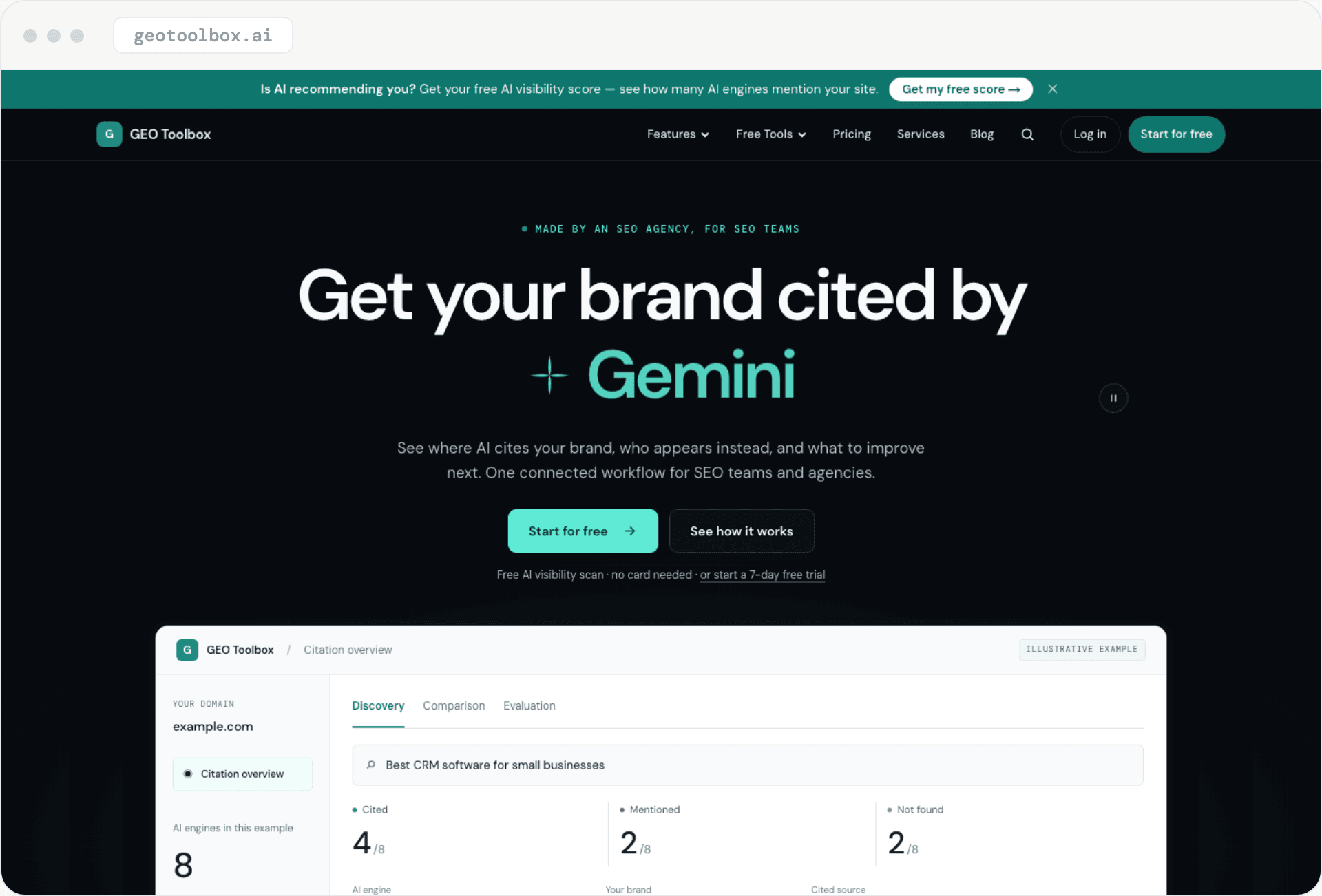
Best for: tracking plus a check that engines can read your pages.
geotoolbox, which we make, sits at the top edge of this tier: plans start at $99 a month ($79 billed annually) with a 7-day free trial, open on three engines (ChatGPT, Perplexity, and Google AI Overviews) and reaching all eight from the Pro tier. It tracks the same mentions and citations as the tools above, and leads with the reachability layer covered below, a free Agent Readiness scan and a Content Analyzer that check whether the engines can fetch, render, and cite your pages. At $99 it is the most expensive option in this budget tier, so the honest case for it is narrow: the reachability layer is what justifies the premium over a cheaper pure tracker. It is not an enterprise research platform either; for prompt-volume depth at scale, see the deeper-citation group above.
What works:
- free reachability scan and Content Analyzer
- all eight engines from Pro
What doesn't:
- priciest tool in this tier
- not built for enterprise prompt volume
The Prerequisite Most Trackers Skip
Every tool above assumes the answer engines can already read your pages. Often they cannot. Google's own guidance is explicit that its generative features draw on crawlable content, so a page a bot cannot fetch is far less likely to be cited, however good it is. A firewall rule or a JavaScript-only render can turn an AI crawler away while every human sees the page fine, and a citation tracker will report that as a content problem when it is really an access one.
geotoolbox's free Agent Readiness scan checks that prerequisite: it fetches and renders your pages the way the AI crawlers do and flags what blocks them. You do not need our tool to look, though: check your robots.txt for rules that block AI crawlers like GPTBot and Google-Extended, watch your server logs for whether bots such as GPTBot and PerplexityBot actually reach you, and run a key page through Google's URL Inspection. Scrunch, for one, now surfaces some of this crawler-access data, but most trackers treat it as an afterthought. Across the sites we scan for AI visibility, a blocked or unrendered page is a common and under-diagnosed reason a brand shows zero AEO visibility despite ranking well in Google, so rule it out before you pay a tracker to confirm the same zero.
The $0 Starting Point
You can answer the first question, "do the engines name me at all," without spending anything. Pick ten prompts a buyer would actually type, run each by hand in ChatGPT, Perplexity, and Google's AI Overviews two or three times, since the answers shift from run to run, and record whether you are named, whether you are cited, and who shows up instead. A spreadsheet holds a month of that easily, and it tells you whether you have a visibility problem worth paying to track.
Pair it with the free reachability check first, since a blocked page makes every other number meaningless. Ahrefs' one-shot checker, the trials most budget trackers run, and geotoolbox's free tools will all establish a baseline for nothing. Our best free SEO tools guide covers the free option for each job.
Many small teams do not need a paid AEO tool yet. What a subscription buys is scale and history: dozens of prompts refreshed on a schedule, competitor benchmarking, and a record of whether your changes moved anything. Reach for it once the manual approach stops fitting in a spreadsheet.
A Pricing Reality Check
Two warnings before the table. First, these tools change tiers constantly, so treat every figure as a starting point checked in August 2026 (Profound's on September 26, 2026), not a quote. Second, the public numbers disagree more than you would expect: Profound's tiers were cited anywhere from $99 to $499; by September 2026 the brand pricing page dropped self-serve pricing altogether (a free Trial plus custom Enterprise only), while agencies get a separate plan, Agency Growth, $99/month base plus $399/month per full client workspace (add-on). Confirm the current figure on the vendor's own page before committing, and watch two things most listicles omit: the billing basis, and how many engines the entry tier actually includes.
| Tool | Reported entry (Aug 2026) | What to watch |
|---|---|---|
| Profound | No self-serve brand tier; free Trial / custom Enterprise | The $99 Starter and $399 Growth brand tiers were withdrawn; agencies: Agency Growth, $99/month base plus $399/month per full client workspace (add-on); Trial covers 3 engines, Enterprise up to 9 |
| Scrunch AI | $250/mo | Adds LLM crawler analytics; a Sitecore company since June 2026 |
| AthenaHQ | $295/mo ($245 annual) | Free Essential tier; ten engines; blind-spot detection |
| Evertune | $800/mo Pro | Enterprise pricing is contact-sales, not public |
| Ahrefs Brand Radar | Free one-shot; paid from $50/mo | Snapshot is free; ongoing tracking needs a paid Ahrefs plan |
| Semrush AI Toolkit | $99/mo add-on | Per domain, four engines; needs a paid Semrush plan |
| SE Ranking | AI add-on €79/mo | Shown in EUR; €63.20 billed annually |
| HubSpot AEO | $50/mo ($45 annual) | Three engines; free 25-prompt trial to start |
| Otterly.ai | ~$29/mo | Gemini and Claude are paid add-ons on every plan |
| Peec AI | €85/mo (€70 annual) | Three-model cap on every self-serve tier; add-ons cost extra |
| AIclicks | ~$59/mo | Engine count varies by plan; verify |
| Rank Prompt | ~$49/mo | Aimed at multi-client agencies |
| geotoolbox | From $99/mo ($79 annual) | 3 engines on Starter, all 8 by Pro; free reachability tools |
The free entry points deserve their own line: Ahrefs' one-shot checker, AthenaHQ's free Essential tier, HubSpot AEO's free trial, the trials most budget trackers run, and geotoolbox's free reachability tools and 7-day trial. You can assemble a useful first view of your AEO position without spending anything, which is the right move before you commit to a subscription.
How to Choose Your AEO Tool
Match the tool to your situation, and weigh three things above the feature list: engine coverage, refresh cadence, and price.
Engine coverage comes first. Find out where your buyers actually ask their questions. If they live in ChatGPT and Google's AI Overviews, you do not need a tool that charges extra for six engines you will never read, and you do want to confirm those two are in the entry tier rather than an upsell.
Cadence is the one people miss. Many tools are built to produce a monthly agency report, not to support daily iteration. If you need to test and adjust prompts often, confirm the refresh speed before you buy, not after. If a monthly snapshot is all you will look at, do not pay for daily.
Price, finally, with the reminder that the expensive tools are not automatically better for a small team. Once you only need the AEO slice, a full enterprise suite is usually poor value. So the practical path for most teams is simple: start with a free tier or a budget tracker, and upgrade only when you hit a real wall.
Frequently Asked Questions
What are AEO tools?
AEO tools measure and improve how answer engines represent your brand. Operationally, they replace a keyword list with a prompt set: instead of tracking positions for "best crm," you track whether ChatGPT names you when someone asks "what CRM should a 10-person agency use." The better ones also benchmark competitors in those answers and recommend changes.
What is the best AEO tool?
There is no single best one, which is why any list that crowns its own product should be read with care. Choose by the job: HubSpot AEO or Otterly for cheap mention tracking, Peec AI for affordable depth, geotoolbox if you also want the reachability check, Profound or AthenaHQ for enterprise citation research, and a suite add-on like Semrush or Ahrefs Brand Radar if you already pay for SEO software. Confirm the engines and billing basis on the plan you would actually buy.
Is there a free AEO tool?
Yes, for limited use. AthenaHQ has a free Essential tier, geotoolbox's free tools check crawler access and AI readiness, Ahrefs offers a free one-shot snapshot, and most budget trackers run trials. The catch is that the free routes are one-off snapshots or capped plans, not ongoing tracking at volume, so they establish where you stand rather than watch it over time.
Do AEO and GEO tools differ?
Mostly no. The terms are used interchangeably, and the same vendors appear on "best AEO tools" and "best GEO tools" lists alike. The line that does matter is between tools that only measure your visibility and tools that also help you change it. For buying purposes, treat AEO and GEO as the same category and sort by that measure-versus-optimize divide instead.
Before You Pay, Check You Can Be Cited
The cheapest move in AEO is the one most trackers will not prompt you to make: confirm the answer engines can actually read your pages. A blocked crawler or a JavaScript-only render produces the same zero in a citation report as weak content, and only one of those is fixed by buying a tool. Run a free reachability check, like geotoolbox's Agent Readiness scan, fix what it flags, then pick a tracker for the job you have. The best AEO tool is worth nothing on a page the engines cannot see.
Sources
- Google AI Overviews hurting clicks - Search Engine Land / Pew Research, 2025 (click behavior on AI-summary searches) -
searchengineland.com/google-ai-overviews-hurting-clicks-study-459434 - AI Overviews one-year presence and citing study - BrightEdge, 2026 (AI Overviews appear on nearly half of searches) -
brightedge.com/resources/weekly-ai-search-insights/ai-overviews-one-year-presence-size-citing - GEO: Generative Engine Optimization - Aggarwal et al. (IIT Delhi + Princeton), KDD 2024 (which content changes lift citation in AI responses) -
arxiv.org/abs/2311.09735 - Sitecore Acquires Scrunch - Sitecore / PR Newswire, June 3, 2026 (Scrunch becomes a Sitecore company; reported ~$225M) -
prnewswire.com/news-releases/sitecore-acquires-scrunch-to-help-brands-influence-discovery-and-buying-decisions-in-the-ai-search-era-302790214.html - Optimizing your website for generative AI features - Google Search Central (AI features use crawlable content) -
developers.google.com/search/docs/fundamentals/ai-optimization-guide - Profound raises $96M Series C at $1B valuation - Profound, February 24, 2026 (funding announcement, before the September 2026 Series D) -
tryprofound.com/blog/profound-raises-96m-series-c - AI Visibility Toolkit - Semrush Knowledge Base, 2026 (AI Toolkit add-on pricing and engine coverage) -
semrush.com/kb/1493-ai-visibility-toolkit - Adobe Completes Semrush Acquisition - Adobe newsroom, April 28, 2026 (Semrush AI Toolkit ownership change) -
news.adobe.com/news/2026/04/adobe-completes-semrush-acquisition